API vs SDK: A Deep Dive
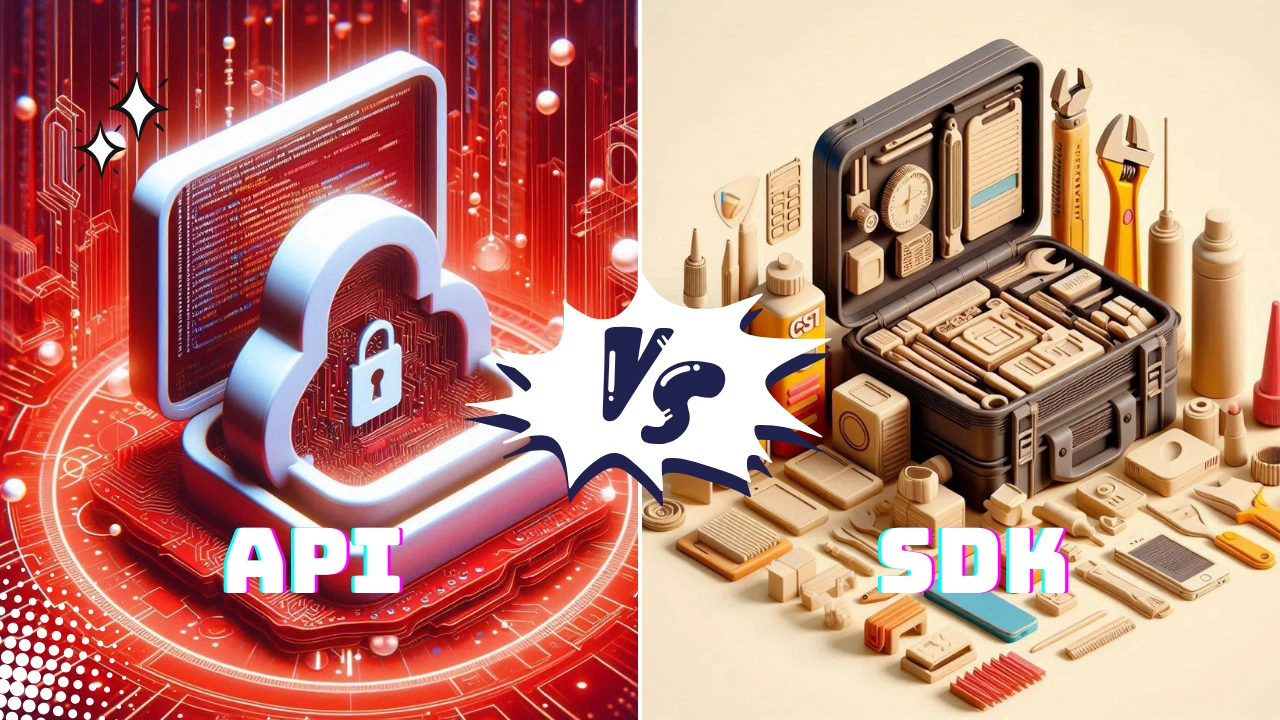
In the intricate tapestry of software development, APIs (Application Programming Interfaces) and SDKs (Software Development Kits) play pivotal roles. While they might seem interchangeable at first glance, they serve distinct purposes and cater to different needs. Let's delve into the nuances of each to understand their unique contributions to the development landscape.
Understanding APIs
An API is essentially a bridge that connects different software components. It defines a set of rules and protocols that govern how these components should interact. Think of it as a contract that outlines the expected behavior and data exchange between the components.
Key characteristics of APIs:
Interoperability:
APIs enable seamless communication between different applications and services, regardless of their underlying technologies.
Data Exchange:
They facilitate the transfer of data and information between components, allowing them to share resources and functionality.
Abstraction Layer:
APIs provide a higher-level abstraction, shielding developers from the complexities of the underlying implementation.
Understanding SDKs
An SDK, on the other hand, is a comprehensive toolkit tailored for a specific platform, framework, or technology. It bundles together various resources to streamline development and enhance efficiency.
Essential components of SDKs:
Libraries:
Pre-written code modules that can be reused in your applications, saving development time.
Tools:
Utilities that aid in development tasks, such as debuggers, compilers, and emulators.
Documentation:
Comprehensive guides and tutorials that help developers understand and utilize the SDK's features effectively.
Sample Code:
Examples that demonstrate how to implement specific functionalities using the SDK
API vs SDK: When to Use Which?
The choice between APIs and SDKs often depends on the project's specific requirements and goals. Here's a brief overview:
-
APIs:
- If you need to integrate your application with external services or data sources.
- If you want to expose your application's functionality to other developers.
- If you prioritize flexibility and customization.
-
SDKs:
- If you're building applications for a specific platform or framework.
- If you want to leverage the platform's native features and optimizations.
- If you value efficiency and ease of development.
My Experience
As a seasoned developer, I've had the opportunity to work with both APIs and SDKs extensively. While APIs offer the flexibility to integrate with various systems, SDKs often provide a more streamlined development experience, especially when working within a specific ecosystem.
For instance, when building Android apps, the Android SDK is invaluable. It provides a rich set of tools, libraries, and documentation that simplify the development process and ensure compatibility with the Android platform. However, for integrating with external services like payment gateways or social media platforms, APIs are the way to go.
Conclusion
In conclusion, both APIs and SDKs are essential tools in the modern developer's arsenal. While APIs provide a flexible way to connect different systems, SDKs offer a more tailored and efficient development experience. The best choice depends on the specific needs of your project.
What's Your Experience?
Have you had experiences with APIs or SDKs that have significantly impacted your development projects? Share your thoughts and insights by writing to us at admin@thesampark.com!